Low Back Pain

No Results Found 0/0

This tool will guide primary care clinicians to recognize common mechanical back pain syndromes and screen for other conditions where management may include investigations, referrals and specific medications.

Click on the sections below to get started:

History and physical examination

Review History

A patient’s history can help identify10,11,12::

  • Back-dominant symptoms (including buttocks) vs leg-dominant symptoms (below-the buttock symptoms).
  • Onset and duration (acute <6 weeks, subacute 6-12 weeks, chronic >12 weeks).
  • Intermittent vs constant symptoms; aggravating/alleviating movements and positions.
  • Screen for serious pathology (red flags) and psychosocial factors (yellow flags) for chronicity.
  • Functional impact: self-care, sleep, work, caregiving, mobility, and valued activities.

Work through questions 1–6 to evaluate the patient’s history

Serious Pathology (Red Flags)2,10,12

Use NIFTI to screen for serious pathology and guide urgency of investigation/referral:

  • Neurological: progressive motor weakness, widespread neurological deficit, or suspected cauda equina syndrome (urinary retention/incontinence, saddle anesthesia, severe/progressive bilateral symptoms).
  • Infection: fever or systemic illness; immunosuppression; intravenous drug use; recent serious infection; severe constant pain not relieved by rest.
  • Fracture: significant trauma; minor trauma in osteoporosis or older age; prolonged corticosteroid use.
  • Tumour: history of cancer or suspected cancer; unexplained weight loss; unremitting night pain; severe fatigue, systemic symptoms.
  • Inflammation (consider inflammatory back pain): chronic low back pain >3 months, age of onset <45 years, morning stiffness >30 minutes, improvement with exercise, disproportionate pain at night, alternating buttock pain and features consistent with axial spondyloarthritis (e.g., ankylosing spondylitis or non-radiographic axial spondyloarthritis).
Investigation and referral (choose based on suspected condition) 2, 10, 11, 12:
  • Suspected cauda equina or severe/progressive neurological deficit: urgent MRI and emergency/surgical assessment.
  • Suspected infection or malignancy: urgent MRI (or appropriate imaging) and expedited specialist assessment; consider labs where appropriate.
  • Suspected fracture: plain radiographs initially; consider CT or MRI if needed for clarification or if radiographs are negative, but suspicion remains.
  • Possible inflammatory spondyloarthritis: Start medication and consider rheumatology referral and appropriate investigations. See Arthritis Society Canada for more information on Anti-Inflammatory Medications.
Serious pathology (red flags) Talking Tips
Click to view

Psychosocial Factors (Yellow Flags)3,10,12

Psychosocial factors (yellow flags) can contribute to delayed recovery and increase the risk of persistent pain and disability. Early identification and support are recommended.

Ask:

  • “How is this pain affecting your quality of life?”
  • “Do you think your pain will improve or become worse?”
  • “Do you think activity, movement, or exercise would help you?”
  • “How are you coping emotionally with your back pain?”
  • “How do you think I would help you the most?”

Look for:

  • Fear avoidance beliefs
  • Catastrophizing or belief that pain = harm
  • Low mood, distress, or social withdrawal
  • Passive coping strategies (e.g., extended rest)
  • Work stressors, compensation concerns
  • Low self-efficacy or poor confidence in self-management efficacy
  • Limited social support

If psychosocial barriers are present:

  • Provide reassurance about the benign nature of most low back pain
  • Discuss “Hurt versus Harm” concept to create a safe concept regarding pain
  • Normalize pain fluctuations and recurrent pain episodes during recovery
  • Encourage staying active and using graded activity
  • Address unhelpful beliefs and expectations through supportive communication
  • Reassess and discuss concerns regularly
  • Refer to appropriate physical and/or psychological services when needed
  • Consider tools such as Keele StarT Back13 .
Psychosocial factors (yellow flags) talking tip
Click to view

Physical examination5,7,10,11

The physical examination aims to:

  • Identify mechanical patterns that dictate physical treatment recommendations.
  • Identify features suggesting specific or serious pathology.
  • Assess baseline physical function.
  • Identify neurological involvement.
Core Elements
  1. Observation: Inspection and observation of posture, gait pattern, transitions and general mobility.
  2. Range of motion: Active flexion, extension, lateral bending, rotation. Record the effect of each movement on the level of pain.
  3. Neurological Screen: Lower-extremity strength, sensation and deep tendon reflexes with leg dominant symptoms. Include Straight Leg Raise when pain is constant. Nerve root testing should be repeated with each examination.
  4. Serious Pathology Assessment: Evaluate for cauda equina syndrome, infection, fracture, malignancy indicators (e.g. saddle anesthesia, urinary retention, fever, trauma, weight loss) and systemic inflammatory symptoms.
Gait5,7,8
  • Heel Walking: Minimum 10 steps (L4, L5)
  • Toe Walking: Minimum 10 steps (S1)
Standing5,7,8
  • Movement testing in flexion
  • Movement testing in extension
  • Trendelenburg test: Assesses hip abductor function (L5)
  • Repeated toe raises: Functional endurance (S1)
Sitting5,7,8
  • Patellar reflex (included as part of routine neurological exam) (L3, L4)
  • Quadriceps strength (L3, L4)
  • Ankle dorsiflexion strength (L4, L5)
  • Great toe extension strength (L5)
  • Great toe flexion strength (S1)
  • Plantar response, upper motor test (where indicated)
Lying supine5,7,8
  • Passive straight leg raise (SLR)
  • Passive hip range of motion
Lying prone5,7,8
  • Femoral nerve stretch: May reproduce anterior thigh symptoms in patients with leg pain
  • Gluteus maximus tone (S1): Palpate buttocks as patient alternately tenses and relaxes
  • Saddle sensation testing can be assessed in the midline between the upper buttocks: Performed only when serious pathology indicates possible cauda equina syndrome
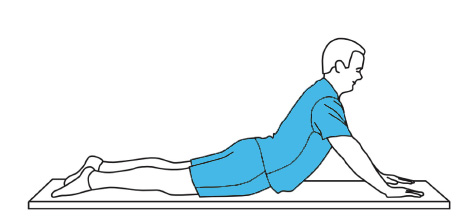
  • Prone passive back extension: Patient uses arms to elevate upper body
Kneeling5,7,8
  • Ankle reflex (S1)

Initial Management

  • Reassure: most acute low back pain improves substantially over days to weeks.10
  • Encourage staying active: continue activities of daily living with modifications; avoid bed rest.10, 12
  • Set functional goals (“reduce pain”, “increase activity and exercise”, “return to work/meaningful activity”).10, 12
  • Use frequent movement in small doses; gradually build up activity (pacing).10, 12
  • Offer education and ongoing self-management support tailored to patient needs and confidence.10, 12

Medication is an adjunct to support function and participation in active care (not a primary treatment). Use the lowest effective dose for the shortest duration and reassess early.10, 12

Talking tip
Click to view

Use history and exam to identify the most likely clinical presentation. The table below offers starting points; management should be tailored to patient goals, comorbidities, contraindications, and response to care.

Select pattern for initial managment details3, 5, 6, 7, 8, 9, 10, 11, 12

Commonly called
  • Non-specific / mechanical / discogenic back pain / extension directional preference
Medication
  • Consider NSAIDs (if no contraindication) for short-term pain relief to support activity, using the lowest effective dose for the shortest duration.
  • Acetaminophen has limited evidence of benefit for low back pain as a primary treatment.
  • Avoid routine use of opioids, benzodiazepines, or muscle relaxants.
Recovery positions

null

IF extension reduces symptoms.

Starter exercises29
  • Hips on ground, push up by extending the arms and locking the elbows, sag the low back, gently release and repeat.
Exercises
Functional activities
  • Encourage short frequent walking
  • Reduce sitting activities
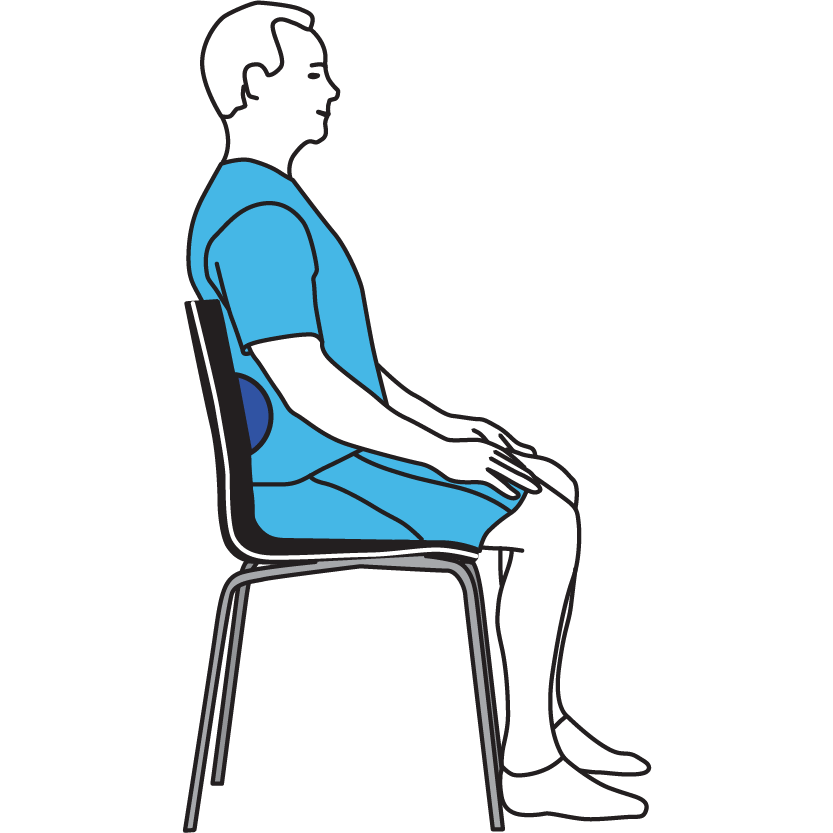
  • Use lumbar extension roll for short duration sitting
  • Application of superficial heat can reduce short-term pain and increase function (Expert Opinion)
  • Refer to physiotherapy
Follow-up
  • 2–4 weeks if referred to physical therapy, or prescribed medication
  • PRN if given home program and relief noted in office visit
Self management
  • Once pain is reduced, engage patient for self-management goals
Commonly called
  • Non-specific/mechanical/facet back pain/flexion directional preference
Medication
  • Consider oral NSAID (if no contraindication) for short-term pain relief to support activity.
  • Acetaminophen has limited evidence of benefit for low back pain as a primary treatment.
  • Avoid routine opioids/benzos.
Recovery positions

null

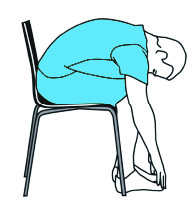
IF flexion reduces symptoms.

Starter exercises
  • Sitting in a chair, bend forward and stretch in flexion.
  • Use hands on knees to push trunk upright.
  • Frequent repetitions through the day
Exercises
Functional activities
  • Encourage sitting or standing with foot stool
  • Reduce back extension and overhead reach
  • Maintain walking
Follow-up
  • 2–4 weeks if referred to therapy, or prescribed medication
  • PRN if given home program and relief noted in office visit
Self management
  • Self management can be initiated in 1st or 2nd session with most patients
Commonly called
  • Compressed nerve / radicular pain / sciatica
Medication
  • First-line: optimize nonpharmacological care and consider short-term oral NSAID (if no contraindication)
  • Avoid routine use of gabapentinoids and benzodiazepines for radicular pain (no proven benefits and there is a risk of potential of adverse side effects)
  • Opioids are not recommended routinely
  • If pain is severe and functionally disabling despite non-pharmacologic and non-opioid options, a very short course of immediate-release opioid may be considered with clear stop goals and close follow-up
  • Avoid opioids for chronic radicular pain
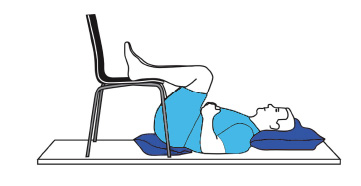
Recovery positions

null

Starter exercises
  • “Z” lie (see image above)
  • Caution: Start with pain-reducing positions. Add gentle movement/exercises only if they reduce symptoms and do not worsen leg pain (stop if symptoms worsen or spread further down the leg).
Exercises
Functional activities
  • Change positions frequently from sit to stand to lie to walk, staying within tolerance and gradually increasing as symptoms settle.
Follow-up
  • 2 weeks for pain management and neurological review
Self management
  • Self-management may be limited initially due to pain severity. Focus on education, symptom-relieving positions, and reassurance. Introduce graded activity and self-management strategies as tolerated, with close monitoring for neurological deterioration
Commonly called
  • Symptomatic lumbar spinal stenosis/neurogenic claudication
Medication (adjunct)
  • Consider oral NSAID (if no contraindication) for short-term pain relief to support mobility
    Emphasize walking tolerance strategies and activity pacing.
    Avoid routine opioids, especially for ongoing symptoms.
Recovery positions

null

Starter exercises
  • Rest in a seated or other flexed position to relieve the leg pain
  • Abdominal strengthening exercises
  • Pelvic tilts
Exercises
Functional activities
  • Use support with walking or standing.
  • Use frequent sitting breaks
Follow-up
  • 6–12 weeks for symptom management and determination of functional impact
  • Imaging and possible surgical referral to Rapid Access Clinic indicated with persistent symptoms
Self management
  • Self management can be initiated in 1st or 2nd session with most patients
Non-spine related pain3,8,10
  • Consider other etiologies prior to initiating pain-directed pharmacotherapy (e.g., renal, gastrointestinal, gynecologic or other visceral conditions) and manage or refer accordingly.
Spine pain does not fit mechanical pattern3,8,10
  • Consider nociplastic pain syndromes where persistent pain is combined with biopsychosocial contributors, sleep disturbance and mood changes, especially when symptoms are disproportionate and/or long-standing.
  • Emphasize active self-management, graded activity, and psychologically informed care; avoid escalating to long-term opioids.

Referral (if required)

Diagnostic imaging7,10,11: Not routinely indicated for acute or recurring low back pain in the absence of serious pathology (red flags). Imaging is most useful when results will change management (e.g., serious pathology suspected or candidate for surgery/intervention after an adequate trial of conservative care). Refer to serious pathology (red flags) for details.

Rehabilitation referral criteria (Physiotherapy)2,7,9,10

  • Absence of serious pathology (red flags)
  • Pain is adequately managed so the patient can tolerate treatment
  • Pain pattern or symptoms vary with movement, position, or activity and/or functional limitations are present
  • Patient is ready to be an active partner in goal setting and self-management

Surgical referral criteria7,9,10

  • Failure to respond to evidence based compliant conservative care of at least 6-12 weeks
  • Severe, recurrent or persistent, disabling leg-dominant pain
  • Worsening nerve irritation signs (SLR or femoral nerve stretch)
  • Progressive motor, sensory, or reflex deficits
  • Suspected or confirmed cauda equina syndrome

Specialist referral7,10

  • Physiatry
  • Cognitive Behavioural Therapy (CBT) or psychologically informed care
  • Multidisciplinary Pain Clinics
  • Rheumatologist (if inflammatory pathology suspected)

Referrals (Pain Clinics)

Supporting material

References

  • [1]

    Korownyk CS, Montgomery L, Young J, Moore S, Singer AG, MacDougall P, et al. PEER simplified chronic pain guideline: Management of chronic low back, osteoarthritic, and neuropathic pain in primary care. Can Fam Physician. 2022;68(3):179-190. 

  • [2]

    Hutchins TA, Peckham M, Shah LM, Parsons MS, Agarwal V, Boulter DJ, et al. ACR Appropriateness Criteria Low Back Pain: 2021 Update. J Am Coll Radiol. 2021;18(5):S361-S379.

  • [3]

    American Psychological Association. APA clinical practice guideline for psychological and other nonpharmacological treatment of chronic musculoskeletal pain in adults [Internet]. Washington (DC): American Psychological Association; 2024 Aug [cited 2024].  

  • [4]

    Sayed D, Grider J, Strand N, Hagedorn JM, Falowski S, Lam CM, et al. The American Society of Pain and Neuroscience (ASPN) evidence-based clinical guideline of interventional treatments for low back pain. J Pain Res. 2022;15:3729-3832. 

  • [5]

    North American Spine Society. Evidence-based clinical guidelines for multidisciplinary spine care: Diagnosis & treatment of low back pain. Burr Ridge (IL): North American Spine Society; 2020. 

  • [6]

    Hegmann KT, Travis R, Andersson GBJ, Belcourt RM, Carragee EJ, Donelson R, et al. Non-invasive and minimally invasive management of low back disorders. J Occup Environ Med. 2020 Mar;62(3):e111-e138. 

  • [7]

    Department of Veterans Affairs, Department of Defense. VA/DoD clinical practice guideline for the diagnosis and treatment of low back pain [Internet]. Washington (DC): U.S. Government Printing Office; 2022 [cited 2024]. Version 3.0. 

  • [8]

    World Health Organization. WHO guideline for non-surgical management of chronic primary low back pain in adults in primary and community care settings. Geneva: World Health Organization; 2023. 

  • [9]

    National Institute for Health and Care Excellence. Low back pain and sciatica in over 16s: assessment and management [Internet]. London: NICE; 2016 Nov 30 (updated 2020 Dec 11). (NICE guideline NG59). 

  • [10]

    Australian Commission on Safety and Quality in Health Care. Low back pain clinical care standard. Sydney: ACSQHC; 2022 Sep. 

  • [11]

    Sharif S, Ali MYJ, Kirazlı Y, Vlok I, Zygourakis C, Zileli M. Acute back pain: the role of medication, physical medicine and rehabilitation: WFNS spine committee recommendations. World Neurosurg X. 2024;23:100273. 

  • [12]

    12. Ontario Health. Acute low back pain: quality standard [Internet]. Toronto (ON): King’s Printer for Ontario; 2025 [cited 2025]. 

  • [13]
  • [14]

    Rapid Access Clinics for Low Back Pain (RAC)Exercise Videos [Internet]. 2023 [cited 2026 Mar 3]. Available from: https://lowbackrac.ca/patients/exercises-for-patients/# 

  • [15]

    Evans M. Low back pain. 2014 Jan 24 [cited 2016 Feb 19]. Available from: https://www.youtube.com/watch?v=BOjTegn9RuY

  • [16]

    Images produced and adapted with permission from CBI Health.